

Swimming is widely recognized as one of the most effective full-body workouts available today. When discussing the benefits of swimming, it is important to understand that this activity combines cardiovascular conditioning, muscular strength, flexibility, and mental relaxation in a single session. Unlike many land-based exercises, swimming uses water resistance to engage multiple muscle groups simultaneously while minimizing stress on joints. This makes it suitable for people of different ages, fitness levels, and physical conditions.
According to the World Health Organization, adults should engage in at least 150 minutes of moderate-intensity aerobic physical activity per week to maintain good health. Swimming fits squarely within this recommendation, offering a sustainable and low-impact way to meet weekly activity targets. Because water supports body weight, the risk of joint strain is significantly reduced compared to high-impact activities such as running or intense gym training.
Health institutions such as Mayo Clinic and Harvard Health Publishing consistently emphasize the importance of regular aerobic exercise for improving heart health, managing weight, and enhancing overall well-being. Swimming aligns closely with these evidence-based recommendations. It improves cardiovascular endurance, strengthens major muscle groups, and contributes to better stress management.
In this article, we will explore the scientifically supported benefits of swimming, including its impact on heart health, weight management, joint protection, mental well-being, and long-term fitness sustainability. Whether you are a beginner or an experienced swimmer, understanding these benefits will help you incorporate swimming more strategically into your fitness routine.
“Swimming” a Unique Full-Body Workout
Swimming stands apart from most other forms of exercise because it simultaneously develops cardiovascular endurance, muscular strength, and flexibility within a single training session. Unlike isolated gym movements that target specific muscle groups, swimming requires coordinated engagement of the upper body, lower body, and core in continuous motion. This integrated activation makes it a true full-body workout.
One of the primary reasons swimming is unique is water resistance. Water is denser than air, meaning every movement—whether pulling, kicking, or stabilizing—requires muscular effort. Each stroke (freestyle, breaststroke, backstroke, or butterfly) recruits major muscle groups including the shoulders, chest, back, glutes, quadriceps, hamstrings, and abdominal muscles. Because resistance is present in all directions, muscles work both concentrically and eccentrically throughout the movement cycle. This improves muscular endurance without the need for external weights.
Another distinguishing factor is buoyancy. Water supports a significant percentage of body weight, reducing stress on joints, tendons, and ligaments. This makes swimming fundamentally different from high-impact activities such as running or plyometric training. The reduced gravitational load allows individuals to exercise intensely while minimizing joint strain. For this reason, swimming is often recommended as a joint-friendly aerobic activity and is commonly included in rehabilitation programs.
Swimming also demands coordinated breathing patterns. Unlike many land-based workouts where breathing occurs naturally and passively, swimmers must synchronize breath control with stroke rhythm. This strengthens respiratory muscles and improves lung efficiency. Over time, this structured breathing pattern enhances oxygen utilization, contributing to better aerobic capacity.
Additionally, swimming promotes neuromuscular coordination. Efficient stroke technique requires balance, timing, posture control, and body alignment. Maintaining a streamlined position in water engages stabilizing muscles that are often underused in traditional strength training routines. This improves body awareness and overall movement efficiency.
From a metabolic perspective, swimming combines aerobic and anaerobic systems depending on intensity. Moderate, continuous laps improve cardiovascular endurance, while sprint intervals increase anaerobic power and calorie expenditure. This versatility allows swimmers to tailor workouts for fat loss, endurance building, or performance enhancement.
Cardiovascular Benefits of Swimming
One of the most important benefits of swimming is its positive impact on cardiovascular health. Swimming is a form of aerobic exercise, meaning it increases heart rate and breathing in a sustained and controlled manner. When performed regularly, it strengthens the heart muscle, improves circulation, and enhances the body’s ability to deliver oxygen to working tissues.
During swimming, the heart works more efficiently to pump blood throughout the body. Over time, this leads to improved stroke volume (the amount of blood pumped per heartbeat) and a lower resting heart rate. A stronger heart does not need to work as hard during daily activities, which reduces overall cardiovascular strain. Institutions such as Harvard Health Publishing consistently highlight that regular aerobic activity plays a critical role in reducing the risk of heart disease, stroke, and hypertension.
Swimming also contributes to better blood pressure control. Moderate-intensity aerobic exercise helps maintain flexible blood vessels, improving vascular function and circulation. Research-supported guidelines from the World Health Organization recommend at least 150 minutes of moderate aerobic activity per week to lower cardiovascular risk. Swimming provides an effective and sustainable way to meet this recommendation.
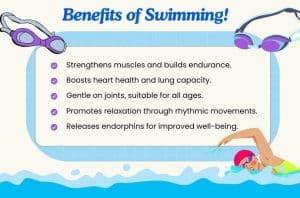
Another significant cardiovascular advantage is improved cholesterol balance. Regular aerobic exercise is associated with increased levels of high-density lipoprotein (HDL), commonly referred to as “good” cholesterol, and improved lipid metabolism. These changes help reduce plaque buildup in arteries, lowering the risk of atherosclerosis.
Swimming also enhances lung capacity and respiratory efficiency. Because swimmers must regulate breathing patterns during strokes, respiratory muscles become stronger and more efficient. Over time, this improves oxygen uptake (VO₂ max), which is a key indicator of cardiovascular fitness. Higher aerobic capacity is linked to reduced long-term risk of cardiovascular disease and improved overall endurance.
Muscle Strength and Toning
One of the most notable benefits of swimming is its ability to build muscle strength and tone the body without the need for heavy weights or high-impact exercises. Water provides natural resistance that is approximately 12 times greater than air, meaning every movement—whether pushing, pulling, or kicking—requires muscles to work continuously. This resistance engages major muscle groups while also targeting smaller stabilizing muscles that are often neglected in traditional gym workouts.
Different swimming strokes activate distinct muscle groups. Freestyle emphasizes the shoulders, chest, triceps, and core, while the backstroke strengthens the upper back, glutes, and hamstrings. The breaststroke targets the chest, inner thighs, and hip muscles, whereas the butterfly stroke is highly demanding on the shoulders, back, and abdominal muscles. The combination of these strokes provides balanced muscular development across the entire body.
Swimming also improves core strength and stability. Maintaining a streamlined position in water requires constant engagement of abdominal, lower back, and pelvic muscles. This strengthens the core, which is crucial for posture, balance, and efficient movement both in and out of the water. Over time, swimmers notice enhanced muscle tone, improved endurance, and better overall body alignment.
Unlike conventional resistance training, swimming offers low-impact strength building, which minimizes stress on joints, ligaments, and tendons. This makes it particularly suitable for individuals with joint pain, arthritis, or those recovering from injuries. Even without lifting weights, consistent swimming can produce noticeable improvements in muscle firmness and endurance.
Weight Management and Fat Loss
Swimming is an effective exercise for managing weight and promoting fat loss because it combines aerobic activity with resistance training, resulting in a high-calorie burn. The continuous movement against water resistance increases energy expenditure, helping the body utilize stored fat for fuel. Depending on intensity, a 30-minute swimming session can burn between 200 to 400 calories, making it comparable to running or cycling, but without the joint stress.
The metabolic benefits of swimming are significant. Moderate-intensity swimming improves cardiovascular efficiency and stimulates the metabolism, while high-intensity interval swimming (such as sprint laps) can elevate the heart rate and maintain calorie burn even after the workout ends. This “afterburn” effect, also known as excess post-exercise oxygen consumption (EPOC), supports fat reduction over time.
Swimming also promotes lean muscle development, which is crucial for sustainable weight management. Muscle tissue requires more energy to maintain than fat, so building muscle through swimming increases resting metabolic rate. This means the body continues to burn calories more efficiently throughout the day, even outside of workouts.
In addition, swimming is accessible to people of all sizes, including those who may struggle with high-impact activities like running. The buoyancy of water reduces stress on joints and lowers the risk of injury, allowing overweight or obese individuals to engage in consistent exercise without discomfort. The reduced joint strain also makes it easier to sustain regular workouts, which is essential for long-term weight management.
The Mayo Clinic emphasizes that combining regular physical activity with a balanced diet is the most effective strategy for achieving and maintaining a healthy weight. Swimming fits seamlessly into this approach, providing a full-body workout that supports calorie burning, muscle building, and overall metabolic health.
Know more about Best Effective weight loss strategies.
Low-Impact Exercise and Joint Protection
One of the most important advantages of swimming is that it provides a low-impact form of exercise while still delivering significant physical benefits. Unlike running, jumping, or high-intensity gym workouts, swimming uses the buoyancy of water to support the body’s weight. This reduces stress on joints, ligaments, and tendons, making it an ideal activity for people with arthritis, chronic joint pain, obesity, or those recovering from injuries.
The water’s natural resistance allows muscles to work effectively without placing undue pressure on bones and connective tissues. This means swimmers can perform prolonged exercise sessions to build strength, endurance, and flexibility without the risk of joint strain or impact-related injuries. The reduced load on the knees, hips, and spine is particularly beneficial for older adults or individuals with mobility limitations, as it allows them to stay active safely.
In addition to protecting joints, swimming improves range of motion and flexibility. The movements required for different strokes involve stretching and extending the limbs in various directions, which helps maintain healthy joint function. This can also aid in rehabilitation, as controlled, low-impact movements facilitate recovery without exacerbating existing injuries.
Rehabilitation specialists often recommend swimming or water-based exercises for patients recovering from surgery, fractures, or musculoskeletal conditions. The combination of resistance and low impact accelerates muscle rebuilding while preventing additional stress on vulnerable areas. This makes swimming not only a preventive exercise but also a therapeutic tool for long-term joint health.
Mental Health Benefits of Swimming
Swimming is not only beneficial for physical health but also offers significant advantages for mental well-being. Engaging in regular swimming sessions helps reduce stress, improve mood, and enhance overall cognitive function. The rhythmic nature of swimming, combined with controlled breathing and repetitive motion, promotes relaxation and triggers the release of endorphins—the body’s natural “feel-good” hormones. This can help alleviate feelings of anxiety and mild depression.
Water has a calming effect on the nervous system. Immersion in water can lower cortisol levels, the hormone associated with stress, and promote a sense of mental calm. The gentle resistance of water provides a soothing sensory experience, making swimming an effective way to clear the mind and reduce mental fatigue. Studies summarized by the Harvard Health Publishing indicate that regular aerobic exercise, including swimming, is associated with improved mood, better stress management, and enhanced sleep quality.
Swimming also supports cognitive health. Coordinating strokes, turns, and breathing patterns challenges the brain, improving focus, motor skills, and overall mental agility. For children, it can enhance coordination and concentration, while for adults, it may help maintain cognitive function as they age.
Another mental health benefit of swimming is its social and recreational aspects. Group swimming classes or team swimming can foster social interaction, reduce feelings of isolation, and provide motivation to maintain a regular exercise routine. Even solo swimming can offer a meditative experience, promoting mindfulness and emotional balance.
Additional Health Benefits
Beyond cardiovascular fitness, muscle strength, joint protection, and mental well-being, swimming offers several other notable health benefits that contribute to overall wellness.
Improved Lung Capacity and Respiratory Efficiency: Swimming requires controlled breathing patterns that strengthen the diaphragm and respiratory muscles. Over time, this increases lung capacity and improves oxygen intake and utilization, which benefits overall stamina and endurance. Enhanced respiratory efficiency can also support better performance in other physical activities.
Enhanced Flexibility: The wide range of motion required for different swimming strokes naturally stretches muscles and joints. Movements like reaching, twisting, and kicking help maintain or improve flexibility, particularly in the shoulders, hips, and spine. Increased flexibility can reduce the risk of injuries and improve posture.
Better Sleep Quality: Regular aerobic exercise, such as swimming, has been linked to improved sleep patterns. Swimming can help regulate circadian rhythms, reduce stress hormones, and promote deeper, more restful sleep. This contributes to overall health and aids recovery from daily physical or mental stress.
Immune System Support: Moderate-intensity swimming can boost the immune system by enhancing circulation and reducing inflammation. Improved blood flow ensures efficient delivery of nutrients and immune cells throughout the body, which may help in resisting infections and maintaining long-term health.
Posture and Core Stability: Swimming engages core muscles to maintain balance and streamline body position in water. Strengthening these muscles improves posture, supports spinal alignment, and reduces the risk of back pain.
Longevity and Overall Wellness: Engaging in regular swimming has been associated with longer life expectancy and reduced risk of chronic diseases, including type 2 diabetes, hypertension, and obesity. Its combination of aerobic, strength, and low-impact exercise makes it a sustainable activity for maintaining overall health across the lifespan.


