
Table of Contents Hide
Yoga exercise is one of the most effective and accessible ways to improve flexibility, strength, balance, and mental clarity—without needing a gym or expensive equipment. Whether your goal is weight management, stress reduction, or simply staying active at home, yoga provides a complete mind-body workout suitable for all ages.
Unlike high-impact training, yoga exercise focuses on controlled movement, breathing techniques, and mindful awareness. This combination improves physical fitness while supporting emotional and mental well-being. In this comprehensive guide, you will learn the benefits of yoga exercise, how to start safely, and the 10 best yoga exercises for beginners that you can practice at home.
What Is Yoga Exercise?
Yoga exercise is a structured practice that combines physical postures (asanas), breathing control (pranayama), and mindfulness techniques. While yoga originated thousands of years ago, it has evolved into a globally recognized fitness practice.
Modern yoga exercise typically falls into several categories:
- Hatha Yoga – Slow-paced and beginner-friendly
• Vinyasa Yoga – Flow-based movements linked with breath
• Ashtanga Yoga – Structured and physically demanding
• Restorative Yoga – Gentle poses focused on relaxation
For beginners, Hatha-style yoga exercise is ideal because it emphasizes correct posture, breathing awareness, and gradual progression.
Health Benefits of Yoga Exercise
Yoga is not just stretching. Scientific research consistently shows that regular yoga exercise supports both physical and mental health.
Improves Flexibility: Many beginners notice increased flexibility within weeks. Stretching muscles and connective tissues reduces stiffness and improves joint mobility.
Builds Muscle Strength: Holding poses such as Plank or Warrior strengthens the arms, legs, and core without external weights. Yoga develops functional strength rather than bulk muscle.
Enhances Balance and Stability: Balancing poses improve coordination and activate stabilizing muscles that protect joints and prevent falls.
Reduces Stress and Anxiety: Deep breathing and mindful movement activate the parasympathetic nervous system, lowering stress hormones and promoting relaxation.
Supports Heart Health: Regular moderate-intensity yoga exercise can improve circulation and contribute to overall cardiovascular wellness.
Improves Posture: Strengthening the back and core muscles reduces slouching, especially for people who sit long hours.
Yoga as a tool to increase physical activity: WHO highlights that routine yoga practice can help people meet recommended physical activity levels as part of a healthy lifestyle and contribute to prevention of noncommunicable diseases (such as hypertension, diabetes, heart disease) when integrated into daily life.
How to Start Yoga Exercise at Home
Starting yoga at home is simple, but correct preparation improves safety and results. Choose a quiet space with enough room to stretch your arms and legs freely. Use a yoga mat if available, but a non-slip surface works fine. Wear comfortable clothing that allows free movement. Begin with 15–20 minutes per session, three to five days per week. Focus on proper alignment rather than speed. Breathing is essential. Inhale through your nose during expansion movements and exhale during contraction or folding movements. Never force flexibility. Mild tension is acceptable; sharp pain is not.
Know more about Home workout without equipment.
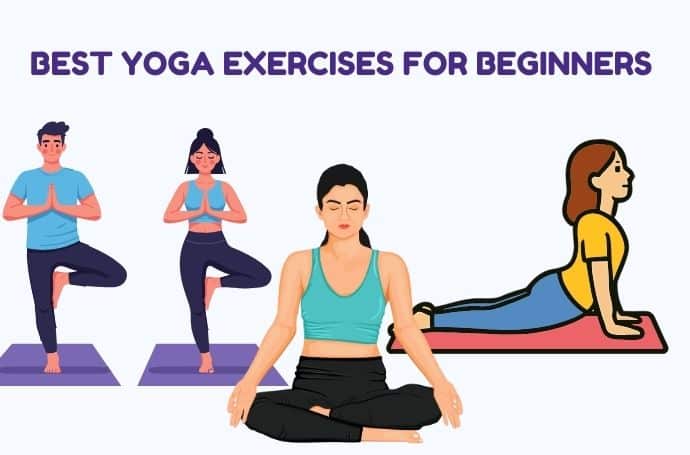
10 Best Yoga Exercises for Beginners
Below are carefully selected yoga exercises that provide full-body engagement and are safe for beginners.
- Mountain Pose (Tadasana)
Mountain Pose may look simple, but it builds posture awareness and body alignment.
How to do it:
Stand upright with feet together or hip-width apart. Distribute weight evenly across both feet. Engage your thighs, lengthen your spine, relax shoulders, and breathe deeply.
Benefits:
Improves posture, balance, and breathing control. Builds foundational awareness for all other yoga exercises.
Hold for 30–60 seconds.
- Downward Facing Dog (Adho Mukha Svanasana)
This is one of the most recognized yoga exercises worldwide.
How to do it:
Start on hands and knees. Lift hips toward the ceiling, forming an inverted V shape. Keep hands shoulder-width apart and feet hip-width apart. Press heels toward the floor.
Benefits:
Stretches hamstrings and calves, strengthens arms and shoulders, improves circulation.
Hold for 20–40 seconds.
Modification: Bend knees slightly if hamstrings are tight.
- Child’s Pose (Balasana)
A restorative pose used for relaxation and recovery.
How to do it:
Kneel on the mat, sit back on heels, and fold forward with arms extended or resting by your sides.
Benefits:
Relieves lower back tension, reduces stress, promotes calm breathing.
Hold for 1–2 minutes.
- Warrior I (Virabhadrasana I)
Warrior I builds lower body strength and stability.
How to do it:
Step one foot forward into a lunge. Keep back leg straight and raise arms overhead. Square hips forward.
Benefits:
Strengthens legs, improves hip flexibility, enhances concentration.
Hold for 30 seconds each side.
- Warrior II (Virabhadrasana II)
A powerful stance for endurance and focus.
How to do it:
From a wide stance, bend front knee and extend arms parallel to the floor. Gaze over front hand.
Benefits:
Strengthens thighs and shoulders, improves balance and stamina.
Hold for 30 seconds each side.
- Tree Pose (Vrikshasana)
A balancing pose that builds mental focus.
How to do it:
Stand on one leg. Place the sole of the other foot against inner thigh or calf. Bring palms together at chest.
Benefits:
Improves balance, strengthens ankles, increases concentration.
Hold for 20–30 seconds per side.
- Cobra Pose (Bhujangasana)
A gentle backbend that strengthens the spine.
How to do it:
Lie face down. Place hands under shoulders. Press palms into floor and lift chest while keeping hips grounded.
Benefits:
Strengthens back muscles, improves spinal flexibility, reduces slouching.
Hold for 15–30 seconds.
- Bridge Pose (Setu Bandha Sarvangasana)
Bridge Pose activates the posterior chain.
How to do it:
Lie on your back, knees bent. Press feet into floor and lift hips upward.
Benefits:
Strengthens glutes and lower back, opens chest, improves circulation.
Hold for 20–40 seconds.
- Seated Forward Bend (Paschimottanasana)
A deep stretch for the back body.
How to do it:
Sit with legs extended. Hinge at hips and reach toward feet.
Benefits:
Stretches hamstrings, calms the mind, supports digestion.
Hold for 30 seconds.
- Cat-Cow Stretch (Marjaryasana-Bitilasana)
A dynamic movement for spinal mobility.
How to do it:
On hands and knees, alternate between arching your back (Cow) and rounding your spine (Cat) with breath.
Benefits:
Improves spinal flexibility, warms up the back, enhances coordination.
Repeat for 8–10 cycles.
Can Yoga Exercise Help With Weight Loss?
Yes, yoga exercise can support weight loss—but the mechanism is slightly different compared to high-intensity cardio or heavy strength training. Yoga works through a combination of calorie expenditure, hormonal regulation, muscle activation, and behavioral change.
First, it is important to understand that weight loss occurs when the body burns more calories than it consumes. While traditional yoga sessions may not burn as many calories as running or HIIT workouts, certain styles—such as Vinyasa, Power Yoga, or fast-paced flow sessions—can significantly elevate heart rate and increase total energy expenditure. However, the real strength of yoga exercise for weight management lies in its long-term sustainability and metabolic impact.
- Builds Lean Muscle Mass
Many yoga poses require you to hold your body weight against gravity. Poses like Plank, Warrior, Chair Pose, and Bridge engage multiple large muscle groups simultaneously. Over time, this builds lean muscle tissue. More muscle mass increases resting metabolic rate (RMR), meaning your body burns more calories even when you are not exercising. This subtle metabolic improvement plays a significant role in long-term fat reduction.
- Reduces Stress-Related Weight Gain
Chronic stress increases cortisol levels. Elevated cortisol is strongly associated with abdominal fat storage and increased cravings for high-sugar, high-fat foods. Yoga exercise emphasizes breathing control and mindfulness, which activates the parasympathetic nervous system. This reduces cortisol levels and helps regulate emotional eating patterns. Many practitioners report fewer cravings and better appetite control after consistent yoga practice.
- Encourages Mindful Eating
Yoga improves body awareness and mindfulness. This awareness often extends beyond the mat into eating habits. When you become more connected to your body, you are more likely to:
- Recognize hunger and fullness cues
• Avoid overeating
• Make healthier food choices
• Eat more slowly and intentionally
These behavioral shifts are critical for sustainable weight loss.
- Improves Hormonal Balance
Regular physical activity, including yoga exercise, can positively influence hormones related to metabolism and appetite regulation. Balanced hormone function improves energy levels and reduces fatigue, making it easier to stay active throughout the day.
- Increases Daily Movement
Yoga can serve as a gateway habit. Many beginners who start with gentle yoga gradually become more active in other areas of life. Increased mobility and reduced joint stiffness often lead to more walking, stretching, and physical engagement overall.
This increase in total daily activity significantly contributes to caloric burn.
- Enhances Sleep Quality
Poor sleep is linked to weight gain and metabolic dysfunction. Yoga promotes relaxation and improves sleep patterns by calming the nervous system. Better sleep helps regulate hunger hormones such as ghrelin and leptin, reducing late-night cravings and improving energy control.
Final Thoughts
Yoga exercise is one of the most sustainable and versatile forms of fitness. It requires no equipment, adapts to every fitness level, and delivers both physical and mental health benefits. Whether your goal is flexibility, strength, stress relief, or overall wellness, practicing yoga at home can be a transformative habit.
Start with foundational poses, focus on breathing, and remain consistent. Over time, you will notice improvements not only in your body but also in your energy, posture, and mental clarity.
Frequently Asked Questions
What is the best yoga exercise for beginners?
Mountain Pose, Child’s Pose, and Cat-Cow are ideal beginner yoga exercises because they are simple, safe, and build foundational strength and flexibility.
How long should I do yoga exercise daily?
Beginners should practice yoga exercise for 15–20 minutes per day, 3–5 times per week for steady progress.
Can I do yoga exercise every day?
Yes, gentle yoga can be practiced daily, while intense sessions should allow rest for muscle recovery.
What time is best for yoga exercise?
Morning boosts energy and focus, while evening yoga promotes relaxation and better sleep.
Do I need equipment for yoga exercise?
No equipment is required, though a yoga mat can improve comfort and stability.


