
Wellness jobs are growing because people want support that goes beyond quick fixes. Employees want healthier workplaces, families want practical lifestyle guidance, and communities need educators who can explain prevention in simple language. For readers exploring a career with purpose, wellness jobs can include coaching, fitness, nutrition, stress management, health education, spa services, and employee wellbeing programs. The best path depends on your strengths, training, comfort with clients, and the type of setting you want to serve.
What makes wellness jobs appealing is the mix of human connection and practical problem solving. Some roles are hands-on, such as massage therapy or fitness instruction. Others focus on planning, content, data, or program management. Many wellness jobs also fit hybrid or remote work, especially coaching, benefits communication, digital community management, and corporate wellness careers. This guide explains the main options, skills, qualifications, and search strategy so you can choose a realistic direction.
Why Wellness Careers Are Expanding
Wellness jobs sit at the intersection of healthcare, prevention, fitness, mental wellbeing, and workplace culture. Organizations increasingly understand that healthier people are more productive, more engaged, and often more confident about daily choices. That does not mean every role requires a clinical license. Many roles in this field are designed to educate, motivate, coordinate, or support people while licensed professionals handle diagnosis and treatment.
The strongest opportunities often appear where employers, clinics, schools, gyms, insurers, and community programs need help turning health information into action. A wellness coordinator might organize screenings and challenges. A health educator might lead workshops on sleep, movement, or chronic disease prevention. A fitness instructor might help beginners build safe exercise habits. These wellness jobs require trust, empathy, planning, and clear communication.
Current labor data also supports the broader demand for wellbeing-related work. Fitness trainer and instructor employment is projected to grow faster than average from 2024 to 2034, while community health workers and dietitians also show positive outlooks. This does not guarantee an easy job search, but it shows that wellness jobs are connected to real workforce needs rather than a passing trend.
11 Popular Wellness Jobs to Consider
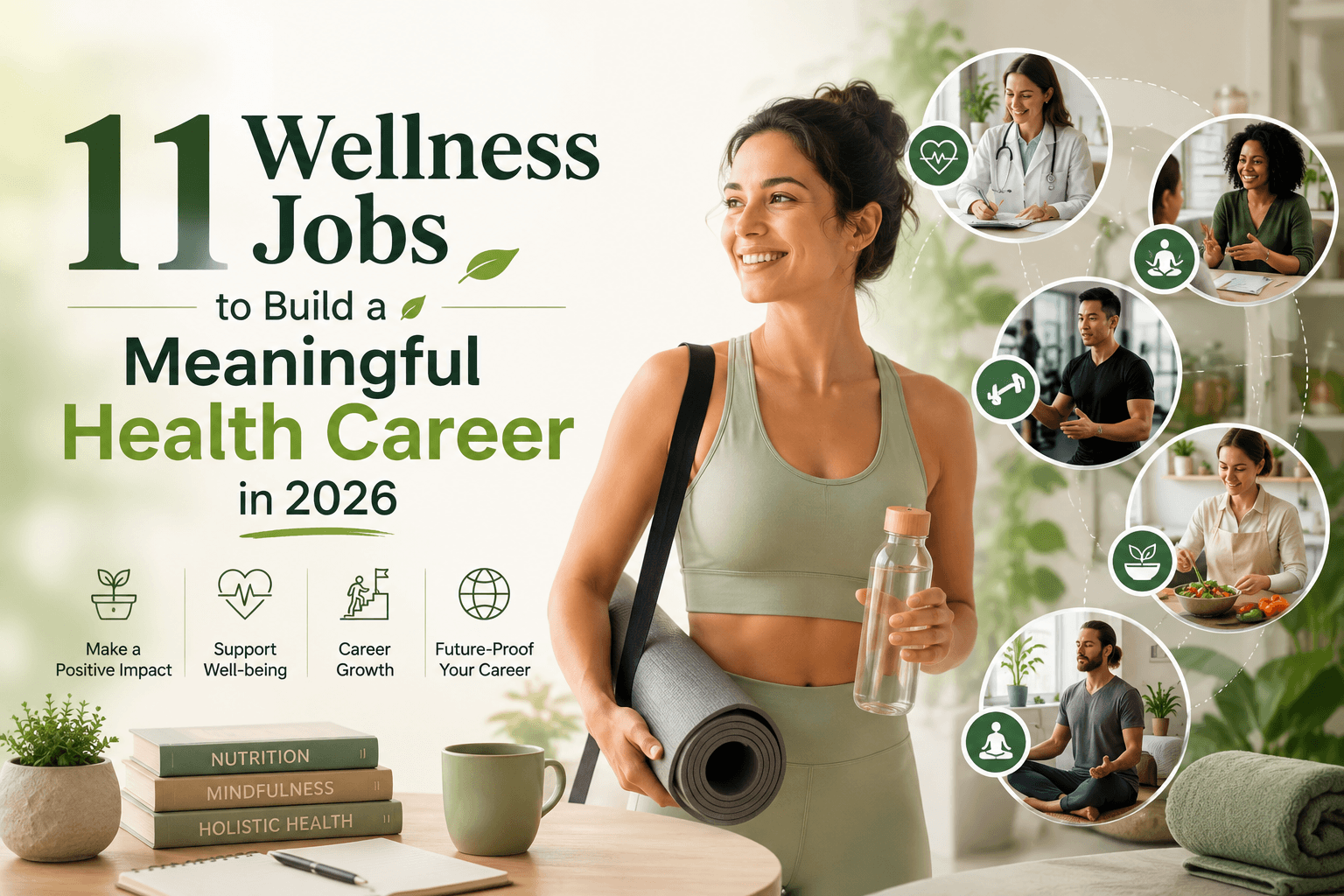
- Wellness coordinator: This role is common in companies, universities, hospitals, and insurance programs. Coordinators plan events, manage vendors, track participation, and communicate benefits. Among entry-to-mid-level wellness jobs, it is a strong choice for people who enjoy organization and teamwork.
- Health coach: Coaches help clients set goals, build routines, and stay accountable. Health coach jobs may appear in digital health platforms, clinics, gyms, or private practices. These wellness jobs suit people who listen well and can guide without giving medical advice outside their scope.
- Fitness trainer or group instructor: Trainers teach exercise technique, create basic programs, and motivate clients. Group instructors lead classes such as strength, cycling, yoga, Pilates, or aquatic fitness. These wellness jobs are active, social, and often flexible, though schedules may include mornings, evenings, and weekends.
- Nutrition educator: Nutrition educators explain food basics, meal planning, label reading, and healthy habits. Some roles require a degree or credential, and registered dietitian roles require formal clinical training. Still, wellness jobs in nutrition education can exist in schools, community programs, gyms, and public health settings.
- Community health worker: Community health workers connect people with local services, explain prevention, and reduce barriers to care. These wellness jobs are especially meaningful for people who understand specific neighborhoods, cultures, or languages and want direct community impact.
- Corporate wellbeing specialist: This role supports employee programs related to movement, stress, ergonomics, mental health awareness, and benefits navigation. These wellness jobs often combine communication, event planning, analytics, and vendor management.
- Mindfulness or meditation instructor: Instructors teach breathing, focus, relaxation, and stress-management practices. These wellness jobs can be found in studios, apps, schools, retreats, and workplace programs. Strong training and ethical boundaries matter because clients may be dealing with stress, grief, or burnout.
- Occupational wellness consultant: Consultants help organizations design healthier workflows, policies, and environments. They may focus on burnout prevention, flexible work, employee engagement, or wellbeing strategy. These roles often require experience in HR, organizational psychology, public health, or benefits.
- Spa, massage, or bodywork professional: Depending on location, massage therapy and bodywork may require a license. These wellness jobs are hands-on and client-centered, often blending relaxation, recovery, and customer service.
- Digital wellness content specialist: Brands, clinics, apps, and creators need accurate articles, newsletters, scripts, and social posts. These wellness jobs reward people who can translate evidence-based guidance into friendly, useful content without exaggerating health claims.
- Program manager for wellbeing initiatives: Larger organizations need leaders who can set goals, manage budgets, review outcomes, and align programs with business priorities. These wellness jobs are ideal for professionals who have already built experience in operations, HR, health promotion, or project management.
Read More about Health Career and Job Opportunities.
Skills Employers Look For
The most successful candidates for wellness jobs usually combine people skills with practical execution. Communication is essential because you may need to explain complex topics in a calm, motivating way. Active listening helps you understand barriers instead of assuming people lack discipline. Organization matters because workshops, screenings, classes, and campaigns involve schedules, budgets, vendors, and follow-up.
Digital skills are also increasingly important in this field. Many programs use apps, dashboards, webinars, email campaigns, online communities, and virtual coaching tools. You do not need to be a programmer, but you should be comfortable learning platforms, tracking engagement, and presenting results. Basic data literacy can help you show whether a program reached the right people and supported measurable goals.
Ethics are just as important as enthusiasm. Wellness jobs should not promise cures, shame bodies, or replace medical care. A credible professional knows when to refer someone to a doctor, therapist, dietitian, or licensed clinician. Employers value candidates who understand scope of practice because responsible guidance protects clients and organizations.
Education, Credentials, and Training
Not all wellness jobs require the same education. A wellness coordinator may need a bachelor’s degree in health promotion, public health, exercise science, psychology, communications, or human resources. A fitness trainer might need a respected certification and CPR training. A dietitian needs accredited education, supervised practice, and licensing where required. A massage therapist may need state-specific schooling and licensure.
Before paying for any program, compare the credential with actual job postings. Look at ten to twenty openings and note repeated requirements. This simple research can prevent wasted money. For wellness jobs in coaching, choose training that teaches behavior change, ethics, motivational interviewing, and referral boundaries. For fitness roles, prioritize reputable certifications and hands-on practice.
Experience can be built through internships, volunteer programs, campus recreation, community events, gyms, clinics, and employee resource groups. Many wellness jobs reward portfolios. Save sample workshop outlines, newsletters, class plans, program calendars, and anonymized reports that show how you think and organize work.
Where to Find Opportunities
Search engines are useful, but the best search is specific. Try terms such as wellness coordinator, health promotion specialist, wellbeing specialist, health educator, fitness instructor, community health worker, employee wellness, and lifestyle coach. Then filter by your city, remote preference, credential level, and industry. Wellness jobs may appear under HR, healthcare, nonprofit, education, hospitality, insurance, fitness, or public health categories.
Networking helps because many wellness jobs are relationship-driven. Attend local health fairs, public health events, gym workshops, chamber of commerce sessions, and professional association webinars. Ask people what their day actually looks like, which credentials mattered, and what entry-level candidates often misunderstand. These conversations can reveal hidden roles and prevent unrealistic expectations.
Your resume should match the language of the posting. If the employer wants program coordination, highlight scheduling, vendor communication, reporting, and participant engagement. If the employer wants coaching, highlight listening, goal setting, behavior change, and client follow-up. For content-focused roles, show writing samples and explain how you check sources.
How to Choose the Right Path
Start with your preferred setting. Do you want a clinic, gym, school, office, community nonprofit, spa, app company, or remote platform? Then consider your energy style. Some wellness jobs require constant face-to-face interaction, while others involve planning, research, writing, or data. Neither is better; the right fit should match your strengths.
Next, evaluate the barrier to entry. Some roles can start with a certificate, volunteer experience, or related degree. Others require licensure, supervised hours, or graduate education. If you need income quickly, choose wellness jobs with realistic entry points while building toward advanced credentials over time.
Finally, think about long-term growth. A fitness instructor might move into training management, programming, or studio ownership. A coordinator might become a wellbeing manager. A health educator might move into public health leadership. A content specialist might become a strategist. The best wellness jobs are not only available now; they also help you build transferable skills.
Salary and Work-Life Considerations
Pay varies widely by role, location, credential, employer, and schedule. Clinical, licensed, management, and specialized roles often pay more than entry-level support roles. Commission-based fitness or coaching positions can fluctuate, while corporate and hospital roles may offer steadier benefits. When comparing wellness jobs, look beyond hourly pay and review health insurance, retirement plans, paid time off, continuing education, and schedule stability.
Work-life balance also varies. Evening and weekend hours are common in gyms, spas, and coaching. Corporate programs may follow standard business hours but include event deadlines. Community roles can involve travel. Remote wellness jobs can be convenient but may require strong boundaries and consistent self-management.
A smart approach is to create a comparison table with four columns: required training, likely schedule, client contact level, and growth potential. This makes it easier to compare options without being distracted by titles alone.
Application Tips That Improve Your Chances
Employers want proof that you can help people take practical steps. In interviews, prepare examples of how you encouraged participation, solved a scheduling problem, explained a health topic, or adapted a plan for different needs. For wellness jobs, stories are more persuasive than vague claims about passion.
Use measurable language when possible. Instead of saying you organized events, say you coordinated a four-week walking challenge, created email reminders, and increased weekly participation. Instead of saying you care about health, explain how you design inclusive programs for beginners, busy employees, or people returning after a break.
Also prepare for scope-of-practice questions. A strong answer shows that you can educate, support, and refer appropriately. This is especially important for wellness jobs that touch nutrition, mental health, injury, chronic disease, or medication-related questions.
Final Thoughts
Wellness jobs can be rewarding because they help people build healthier habits in everyday environments. The field is broad, so the best career move is not to chase every title. Choose a path that matches your personality, training budget, preferred setting, and long-term goals. Build credible skills, learn ethical boundaries, and collect examples of your work.
Whether you are drawn to coaching, fitness, nutrition education, community outreach, workplace wellbeing, or content, wellness jobs offer many ways to contribute. With focused training and a practical job-search strategy, you can turn an interest in health into work that supports both your career and the wellbeing of others.

