


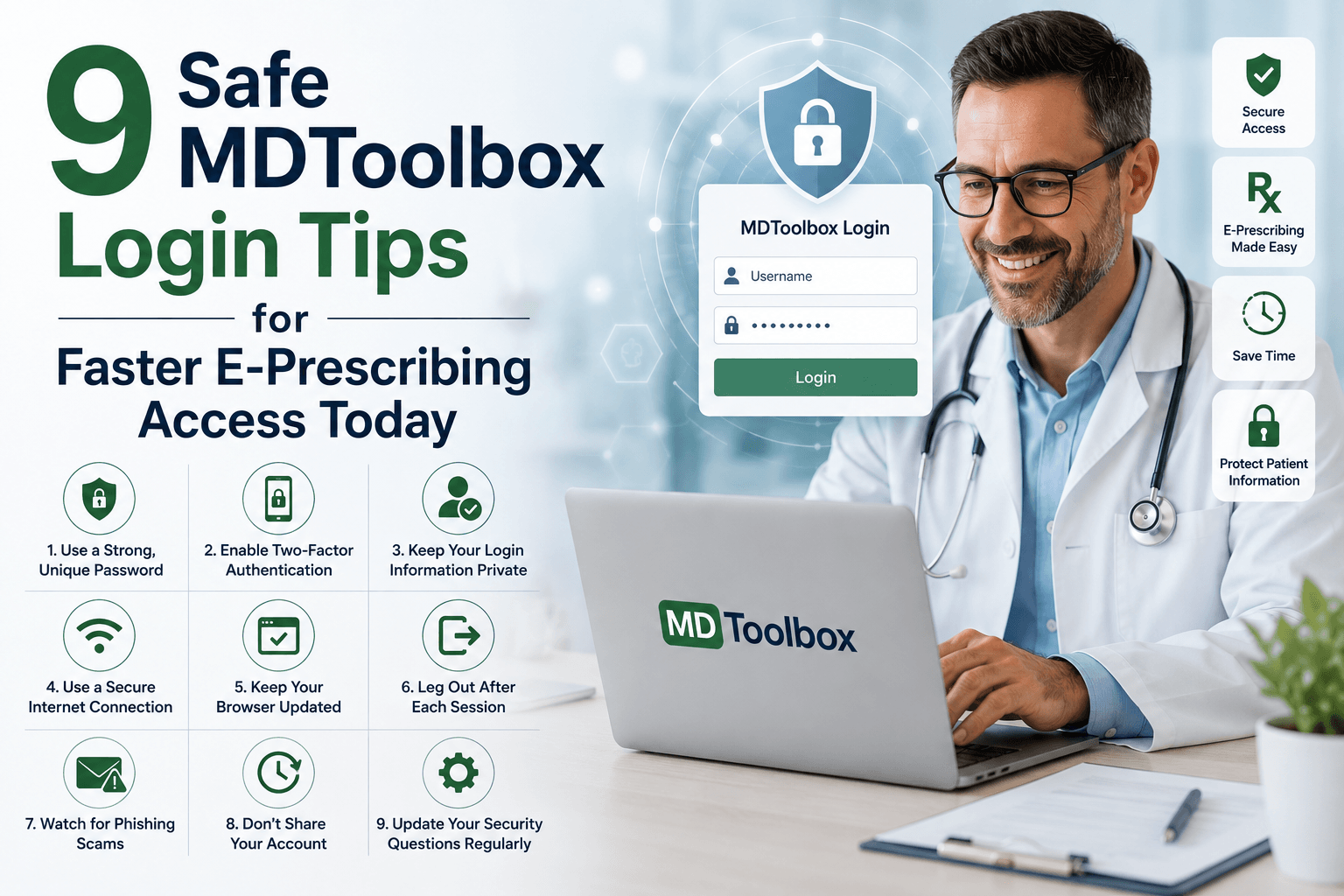
For medical practices, prescribing software is not just another online tool. It connects patient details, provider permissions, pharmacy routing, medication histories, refill requests, and, when enabled, controlled-substance workflows. That is why a careful mdtoolbox login process matters for every prescriber, manager, assistant, and IT contact who uses the system. A quick sign-in may feel routine, but the habits around access can affect speed, compliance, patient privacy, and daily clinic confidence.
This guide explains how to approach mdtoolbox login safely, how to prepare before signing in, what to check when access fails, and how office teams can reduce repeated mistakes. It is written for informational use, not as official MDToolbox support, and users should follow their organization’s policies and the vendor’s current instructions. The goal is simple: make mdtoolbox login easier to understand without encouraging shortcuts that weaken security.
1. Know What the Portal Is Used For
Before starting mdtoolbox login, understand the purpose of the account you are accessing. MDToolbox-Rx is described by the vendor as an electronic prescribing system that can work as a standalone tool or sync with other office software. Depending on a practice’s setup, users may handle prescriptions, refill responses, medication checks, prior authorization tasks, patient lists, pharmacy selection, or mobile prescribing.
Because these tasks involve sensitive healthcare information, mdtoolbox login should only happen through approved devices, approved network conditions, and assigned credentials. A front-desk user, clinical assistant, prescriber, and administrator may each have different permissions. The safest approach is to treat every mdtoolbox login as a role-based access step, not just a username-and-password screen.
2. Use the Official Access Path
A common mistake is searching the web and clicking the first result without checking whether the page is legitimate. For mdtoolbox login, use the official login link saved by your practice, a bookmarked vendor page, your EHR’s integrated link, or guidance from your administrator. Avoid unofficial login directories, copied links from old emails, or search ads that might resemble a portal.
The official route matters because e-prescribing accounts can be attractive targets for phishing. If a user enters credentials on a fake page, the risk is not limited to inconvenience. It can expose patient data, create prescription workflow disruption, and force a practice to investigate access activity. Teach team members to verify the web address, avoid suspicious pop-ups, and pause before entering credentials during mdtoolbox login.
3. Prepare Credentials and Multi-Factor Tools
A smooth mdtoolbox login often starts before the login page opens. Prescribers and staff should know their assigned username, password rules, recovery method, and whether a second factor is required. If controlled-substance prescribing is enabled, EPCS workflows may include stronger identity, token, or two-factor requirements. These added steps are designed to protect both patients and prescribers.
Do not share a password to make mdtoolbox login faster for another employee. Shared access makes it harder to track responsibility and can create compliance problems. If someone needs access, an administrator should create or request the correct user profile. Good access hygiene includes unique users, timely deactivation for former staff, and separate permissions for different job duties.
4. Check Browser, Device, and Network Basics
When mdtoolbox login does not work, the cause is often practical rather than dramatic. A browser cache issue, an outdated bookmark, blocked cookies, strict popup settings, poor connectivity, or a VPN conflict can interrupt access. Start with simple checks: confirm internet access, refresh the page, try a supported browser, review saved password accuracy, and make sure the time on the device is correct.
Clinic teams should also decide which devices are appropriate for mdtoolbox login. A shared workstation in a nurses’ station may need automatic locking, short idle time, and clear sign-out rules. A provider’s phone or tablet may need screen lock, device encryption, and app updates. If the practice permits remote access, it should set expectations for private networks and avoid public computers.
5. Sign In With Security in Mind
The best mdtoolbox login routine is consistent. Open the approved page, verify the address, enter the assigned username, use the password manager or type credentials carefully, complete any required verification, and confirm that the account displays the expected role and patient context. If anything looks unfamiliar, stop and contact internal support or MDToolbox support before continuing.
Users should also sign out after finishing. Leaving a prescribing session open can cause workflow confusion if another person uses the same device. It may also weaken audit trails. A safe mdtoolbox login habit includes a safe logout habit: exit the prescribing module, close the browser tab when appropriate, and lock the workstation when stepping away.
6. Understand Mobile Login Differences
MDToolbox describes a mobile e-prescribing option for smartphones and smaller tablets, and app store descriptions note that the mobile version is available to MDToolbox-Rx web users. Mobile access can be helpful for providers who move between exam rooms, facilities, home visits, or after-hours tasks. However, mdtoolbox login on a mobile device should not be treated casually.
Mobile users should keep the operating system updated, avoid rooted or jailbroken devices, use biometric or strong passcode locking, and download apps only from official app stores or vendor instructions. If a phone is lost, the practice should know how to respond quickly. A secure mdtoolbox login on mobile depends on both the app and the device environment.
7. Troubleshoot Common Access Problems
If mdtoolbox login fails, document the exact issue before trying random fixes. Is the username rejected? Is the password expired? Does the page loop after authentication? Is the EHR integration not opening the prescribing module? Is the two-factor token unavailable? Does the problem affect one user, one browser, one location, or the entire practice?
A structured approach saves time. First, confirm the official page and credentials. Second, test a different browser or device if policy allows. Third, check whether other users can access the portal. Fourth, review internal account status and permissions. Fifth, contact the practice administrator or vendor support with details. This process keeps mdtoolbox login troubleshooting focused and reduces repeated lockouts.
8. Protect Prescriber and Staff Accounts
Account protection should be part of training, not an occasional reminder. Every mdtoolbox login should connect to a real person and a legitimate job role. HHS guidance on healthcare security emphasizes safeguards for electronic protected health information, and federal technical safeguard rules include unique user identification. In simple terms, access should be traceable and appropriate.
Practices can support safer mdtoolbox login behavior with password managers, onboarding checklists, offboarding procedures, role reviews, and refresher training. Staff should know whom to contact if they suspect phishing, see prescriptions they did not create, or notice unusual account behavior. Security culture works best when reporting concerns is easy and blame-free.
9. Build a Clinic Login Checklist
A short checklist can make mdtoolbox login more reliable across a busy office. Keep it simple enough for real use: use the approved link, verify the page, sign in with assigned credentials, complete required verification, confirm the correct patient and provider context, complete the task, sign out, and lock the device. This checklist can be placed in an internal SOP or training binder.
For administrators, the checklist can include extra steps: confirm new-user roles, remove access for departing staff, review failed login patterns, update contact information, and maintain support escalation notes. If a clinic uses an EHR integration, the checklist should explain whether mdtoolbox login happens directly, through the EHR, or through both paths depending on the task.
MDToolbox e-Prescribing Software page.
Best Practices for Clinics and Small Practices
Small and medium practices often balance speed with limited IT resources. That makes mdtoolbox login planning especially important. A solo office may depend on one administrator, while a growing group may have several prescribers, nurses, assistants, and billing or operations staff. The more people involved, the more important it becomes to keep access rules written down.
A practical policy should answer basic questions. Who approves access? Who resets passwords? Who contacts vendor support? Which devices are allowed? What happens when an employee leaves? How are mobile users trained? What should a prescriber do if a two-factor method is unavailable? These questions turn mdtoolbox login from an informal habit into a manageable workflow.
Clinics should also review links and bookmarks periodically. Old URLs, retired shortcuts, and unofficial notes can create confusion. If the official vendor page changes, update internal documentation quickly. The goal is not to make mdtoolbox login complicated; it is to make the correct route obvious.
Read more about: 5 Essential Steps to Master MD Toolbox Login.
User Experience and SEO Search Intent
Many people searching for mdtoolbox login want a direct access path, but a helpful article should also explain safety, troubleshooting, and next steps. Searchers may include providers trying to prescribe, staff supporting a clinician, office managers preparing new users, or IT workers solving access problems. Content that answers these needs can perform better because it matches the real intent behind the query.
For website owners, the best page structure includes a clear opening answer, concise steps, safety reminders, troubleshooting tips, FAQs, and a disclaimer that the page is not the official vendor portal. Avoid pretending to be MDToolbox or collecting credentials. A responsible mdtoolbox login article should guide users toward safe access, not capture personal information.
Conclusion
A safe mdtoolbox login process supports faster prescribing, clearer accountability, and stronger protection for sensitive healthcare workflows. The essentials are straightforward: use the official access path, rely on assigned credentials, prepare two-factor tools, maintain secure devices, document common issues, and sign out when work is complete. Clinics that standardize these habits can reduce access delays and help providers focus on patient care.
Whether your team uses MDToolbox-Rx as a standalone e-prescribing tool or through another system, mdtoolbox login should be treated as part of the clinical workflow. With a simple checklist and thoughtful training, the portal becomes easier to use without sacrificing security.
Frequently Asked Questions
Is this the official MDToolbox portal?
No. This article is an informational guide. Users should complete mdtoolbox login only through the official vendor route, their practice’s approved link, or an integrated EHR pathway provided by their organization.
Why does my login fail after I enter the right password?
A failed mdtoolbox login can happen because of an expired password, account lockout, browser issue, incorrect saved password, integration problem, or unavailable verification method. Follow your clinic’s support process rather than repeatedly guessing.
Can staff share one prescribing account?
No clinic should rely on shared credentials for routine access. A secure mdtoolbox login process uses assigned users and appropriate permissions so activity can be tracked and access can be removed when roles change.
Can I use the mobile version?
Mobile access depends on your subscription, role, device, and clinic policy. If allowed, complete mdtoolbox login only on a protected device and follow your organization’s mobile security rules.

