


"Medical Disclaimer: This article is for informational and educational purposes only and does not constitute medical advice, diagnosis, or treatment. Always consult a qualified healthcare professional regarding any medical condition, symptoms, or treatment decisions. Never disregard professional medical advice or delay seeking it because of information you have read in this article."
Why shake shack nutrition helps before you order
Fast-food nutrition is not about perfection. It is about seeing the menu clearly enough to choose what fits your day. Shake Shack is known for burgers, chicken, fries, shakes, and seasonal items, so the numbers can vary from a lighter protein-focused order to a high-calorie treat meal. A little planning helps people enjoy the food without feeling surprised later. The goal is not to turn a fun meal into homework. The goal is to know which items carry the most calories, sodium, sugar, and saturated fat.
Official menu nutrition changes over time, so the smartest habit is to check the current nutrition and allergen guide before relying on old screenshots. As a general reference, recent official data lists a Single ShackBurger at 500 calories, a Chicken Shack at 550 calories, regular fries at 470 calories, and a vanilla shake at 680 calories. Those numbers show why combinations matter. A burger by itself is one decision; adding fries and a shake is a very different meal.
Quick shake shack nutrition snapshot
The menu can be easier to understand when grouped by role. Burgers and chicken sandwiches are the main meal items. Fries, cheese fries, and bacon cheese fries are sides that can add a lot quickly. Shakes and frozen desserts are treats, often with more calories and sugar than people expect. Drinks range from water and unsweetened tea to lemonade and soda. Add-ons such as cheese, bacon, sauce, and avocado can change the final profile.
The good news is that many choices are adjustable. A lettuce wrap can replace a bun for some items. A burger patty itself may provide about 190 calories and 19 grams of protein, while a lettuce wrap adds very little. Sauce can be used lightly. Fries can be shared. A shake can be split. These simple choices do not remove the Shake Shack experience; they make it more intentional.
Calories in shake shack nutrition
Calories are only one part of nutrition, but they are useful for comparing menu items. A single burger may fit comfortably into lunch for many people. A double or triple burger moves into a heavier range. Fries add a side that can rival or exceed the calories in a small meal. Shakes can be dessert-level beverages, with vanilla around 680 calories and some flavors higher. None of this makes them forbidden. It simply means the full order matters more than one item.
A practical approach is to decide what you want most. If the burger is the main craving, consider water or unsweetened tea and skip or share fries. If the shake is the treat you came for, choose a simpler main item or split the shake with someone. If fries are non-negotiable, choose a smaller main or share the side. Nutrition becomes easier when one part of the order is the star and the rest supports it.
Protein and fullness in shake shack nutrition
Protein can help a fast-food meal feel more satisfying. Burgers, chicken, cheese, and some breakfast items provide meaningful protein. The Single ShackBurger has been listed with about 29 grams of protein, while the Chicken Shack is listed around 33 grams. Chicken Bites can also provide protein, with the six-piece option listed at 350 calories and 18 grams of protein in recent official data. These options can work when paired thoughtfully.
Fullness also depends on fiber, volume, and hydration. Fast-food meals are often low in vegetables and fiber unless you intentionally add them. Lettuce, tomato, onion, and pickles help, but they do not replace a full salad or vegetable side. If eating Shake Shack as part of a busy day, consider adding fruit, vegetables, or a fiber-rich meal later. One meal does not need to do everything, but the day should balance out.
Sodium in shake shack nutrition
Sodium is one of the biggest numbers to watch. Many restaurant foods are seasoned for bold flavor and consistency. Recent official listings show a Single ShackBurger at 1,250 milligrams of sodium and a Chicken Shack at 1,170 milligrams. Some larger burgers and loaded fries can go much higher. For people with high blood pressure, kidney disease, heart failure, or sodium-sensitive conditions, this matters.
A lower-sodium strategy starts with portion and toppings. Choose a single instead of a double or triple. Skip bacon or extra cheese when sodium is a concern. Use sauce lightly. Drink water. Avoid pairing a high-sodium main with high-sodium fries and a salty add-on. If the meal is higher in sodium, keep the rest of the day simpler with fruits, vegetables, unsalted nuts, yogurt, oats, or home-cooked foods.
Get Shake Shack Nutrition Information.
Sugar and drinks in shake shack nutrition
Beverages can quietly reshape the meal. Unsweetened iced tea and water are the easiest low-sugar choices. Lemonade, soda, sweet tea, floats, and shakes can add significant sugar. A shake is best understood as dessert, not hydration. When someone wants the shake, planning around it makes more sense than pretending it is just a drink.
This is where a human approach matters. If a person rarely gets Shake Shack and really wants a shake, enjoying it may be worth it. The smarter move is to make that treat visible. Share it, order a smaller portion if available, or choose a lighter meal around it. Food satisfaction can prevent the feeling of restriction that often leads to overeating later.
Better-balanced shake shack nutrition orders
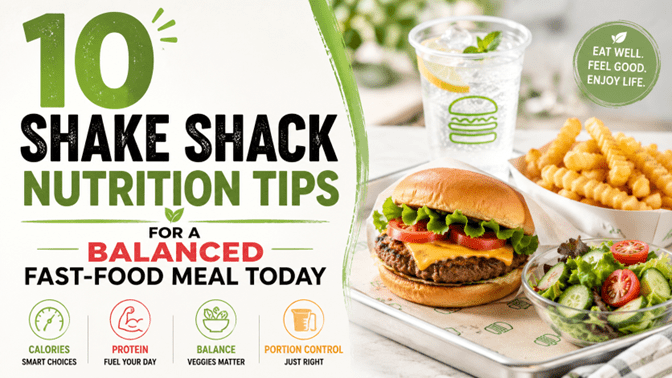
For a more balanced meal, choose a single burger or chicken option, add vegetables when possible, drink water or unsweetened tea, and share fries. Another option is Chicken Bites with a sauce on the side and a simple drink. A lettuce-wrapped burger can be useful for people limiting refined carbohydrates, though it does not automatically make the meal low in calories if cheese, sauce, and fries remain large.
For someone who wants a classic order, a Single ShackBurger with water is a straightforward choice. For someone who wants fries, splitting regular fries can keep the experience while lowering the personal portion. For someone who wants dessert, sharing a shake can turn a 680-calorie beverage into a more moderate treat. The best order depends on appetite, goals, and what else was eaten that day.
What families should know about shake shack nutrition
Families often need quick decisions, not complicated tracking. A simple rule is to avoid stacking every treat at once. Kids and adults can enjoy burgers, fries, and shakes, but a meal that includes all three in large portions may be excessive for a normal day. Choose one fun extra, then keep the rest simple. Water, shared fries, and a smaller dessert can keep the meal enjoyable.
Allergen information is also important. Shake Shack menu items commonly contain milk, egg, wheat, soy, sesame, and other allergens depending on the item. Cross-contact can be a concern in restaurant kitchens. People with food allergies should use the official allergen guide and speak with staff before ordering. Nutrition is important, but safety comes first.
Mistakes to avoid with shake shack nutrition
The first mistake is looking only at calories and ignoring sodium. The second is assuming a chicken item is always lighter than a burger. Some chicken sandwiches are breaded, sauced, and served on buns, so they may be similar to burgers in calories. The third mistake is forgetting add-ons. Cheese, bacon, sauce, avocado, and loaded sides can all change the meal.
Another mistake is turning fast food into an all-or-nothing choice. People often do better when they build a realistic order instead of trying to be perfect. A reasonable fast-food meal that fits your day is more sustainable than a strict plan you resent. The best nutrition strategy is the one you can use when you are hungry, rushed, and standing in line.
Learn about Benefits of Guava Pulp.
Final takeaway on shake shack nutrition
The menu becomes easier when you decide what matters most: burger, fries, shake, lower sodium, more protein, fewer added sugars, or simply a satisfying meal with friends. Use current official nutrition information, avoid stacking every high-calorie item at once, and make one or two smart swaps. That is enough for most people to enjoy the meal with confidence.
A practical way to use this guide is to read it once, then keep the main ideas in mind the next time you shop, cook, order, or compare labels. Nutrition decisions are rarely perfect, and they do not need to be. A steady pattern of reasonable portions, enough protein, satisfying fiber, hydration, and moderation usually matters more than one single meal or drink. That is why the best plan is simple enough to repeat on a busy day, flexible enough for family meals, and honest enough to include the foods and drinks people genuinely enjoy.
It also helps to treat numbers as tools rather than judgments. Calories, carbohydrates, fat, protein, sodium, and sugars tell part of the story, but hunger, taste, culture, budget, medical needs, and personal routine matter too. When readers can connect the numbers to real-life choices, they are more likely to make changes that last. The goal is not to remove pleasure from eating. The goal is to create clarity, so every choice feels intentional instead of confusing.
A practical way to use this guide is to read it once, then keep the main ideas in mind the next time you shop, cook, order, or compare labels. Nutrition decisions are rarely perfect, and they do not need to be. A steady pattern of reasonable portions, enough protein, satisfying fiber, hydration, and moderation usually matters more than one single meal or drink. That is why the best plan is simple enough to repeat on a busy day, flexible enough for family meals, and honest enough to include the foods and drinks people genuinely enjoy.
It also helps to treat numbers as tools rather than judgments. Calories, carbohydrates, fat, protein, sodium, and sugars tell part of the story, but hunger, taste, culture, budget, medical needs, and personal routine matter too. When readers can connect the numbers to real-life choices, they are more likely to make changes that last. The goal is not to remove pleasure from eating. The goal is to create clarity, so every choice feels intentional instead of confusing.
A practical way to use this guide is to read it once, then keep the main ideas in mind the next time you shop, cook, order, or compare labels. Nutrition decisions are rarely perfect, and they do not need to be. A steady pattern of reasonable portions, enough protein, satisfying fiber, hydration, and moderation usually matters more than one single meal or drink.
That is why the best plan is simple enough to repeat on a busy day, flexible enough for family meals, and honest enough to include the foods and drinks people genuinely enjoy. A final practical reminder: use shake shack nutrition as a guide for real choices, not as a rigid rule that removes enjoyment from eating or drinking.
FAQs about shake shack nutrition
What is a lighter order?
A single burger or chicken option with water and shared fries is usually more moderate than a double, loaded fries, and a shake.
Are shakes high in calories?
Yes, many are dessert-level items. Are fries the biggest issue? They can be, especially loaded versions, but the full combination matters most.
Is lettuce wrap always best?
It reduces bun calories and carbohydrates, but toppings and sides still count.
Should you skip sauce?
Not necessarily. Sauce adds flavor and satisfaction, but using a modest amount can help.
Is Shake Shack okay on a balanced diet?
Yes, if it is part of an overall pattern that includes plenty of fruits, vegetables, whole grains, lean proteins, and lower-sodium meals. One restaurant meal does not define health.

