


"Medical Disclaimer: This article is for informational and educational purposes only and does not constitute medical advice, diagnosis, or treatment. Always consult a qualified healthcare professional regarding any medical condition, symptoms, or treatment decisions. Never disregard professional medical advice or delay seeking it because of information you have read in this article."
Why nutritional information on chicken wings matters for everyday eaters
Chicken wings are the kind of food people usually enjoy before they study the label. They show up at family gatherings, game nights, takeout dinners, barbecue weekends, and quick restaurant meals. That is why a clear nutrition guide is useful. Wings can provide satisfying protein, but the final numbers change quickly depending on skin, breading, frying oil, sauce, dipping sides, and portion size. A small plate of baked wings is not the same as a basket of deep-fried wings with creamy dip and fries.
Understanding the difference helps readers enjoy them without guessing.
A helpful starting point is to separate the wing itself from everything added to it. Plain chicken has no carbohydrate, but breading, honey sauce, barbecue glaze, sweet chili, and sugary marinades can turn a low-carb protein into a higher-carb meal. Skin adds flavor and fat, while removing skin lowers fat but changes texture. Cooking method matters too. Roasting or air-frying usually keeps the ingredients simple; deep-frying can add calories and fat, especially when the coating absorbs oil.
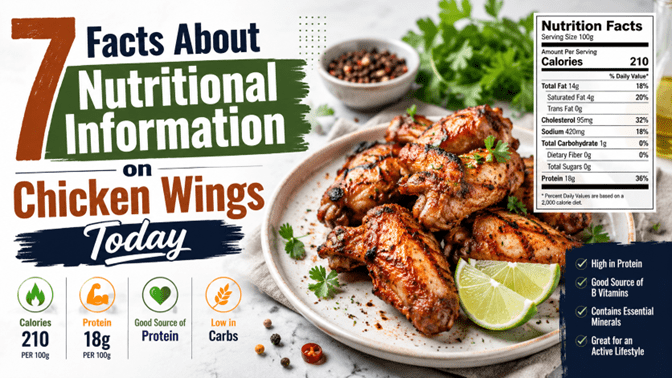
Quick nutritional information on chicken wings snapshot
| Type of Chicken Wing (per 100 g) | Calories | Protein | Fat | Carbohydrates |
|---|---|---|---|---|
| Roasted Chicken Wing (Meat & Skin) | 290 kcal | 27 g | 19 g | 0 g |
| Roasted Chicken Wing (Meat Only) | 203 kcal | 30 g | 8 g | 0 g |
| Fried, Breaded Chicken Wing | Higher than roasted varieties* | Varies | Varies | Varies |
Many people underestimate how many wings equal a serving. Bone-in pieces look bigger than the edible meat they provide, and restaurant sizes vary. A plate labeled six wings may be small at one restaurant and large at another. When tracking more closely, weigh the edible portion or use a consistent restaurant nutrition guide. At home, the easiest habit is to plate the wings instead of eating from the tray. That one step makes it easier to see the meal clearly.
Read more about Chicken wings nutrition: calories, carbs, GI, protein, fiber, fats.
How to read nutritional information on chicken wings without getting overwhelmed
Start with calories, protein, fat, sodium, and added sauces. Protein is the strength of wings. It supports fullness and makes wings more satisfying than many snack foods. Fat is not automatically bad, but skin-on wings can raise the fat level fast. Sodium deserves attention because seasoning blends, brines, buffalo sauce, ranch, blue cheese dip, and restaurant marinades can stack up quietly. If someone is watching blood pressure or fluid retention, sodium may matter more than calories.
Carbohydrate usually comes from the preparation, not the chicken itself. Dry rubs may be nearly carb-free, while sweet sauces can add sugar. Breaded wings may add both carbohydrate and fat. A creamy dip can turn a moderate plate into a heavier meal. Readers who want a lighter version can choose grilled, baked, roasted, or air-fried wings, add sauce lightly, and serve dip on the side instead of coating every bite.
Protein benefits in nutritional information on chicken wings
Wings are popular partly because they feel snackable, but nutritionally they behave more like a protein food than a chip or cracker. That protein can help a meal feel complete, especially when paired with vegetables, salad, beans, fruit, or a whole-grain side. The challenge is that wings are often served in environments where vegetables are missing and salty extras are everywhere. A balanced plate changes the experience without removing the food.
Think of wings as the center of the meal rather than the entire meal. Add crunchy celery, carrots, cucumber, roasted broccoli, slaw, or a simple salad. Choose a dip you enjoy, but use a small cup. Drink water or unsweetened tea. If fries are part of the meal, share them or order a small portion. These adjustments sound simple because they are. Small changes help people keep the flavor while reducing the excess.
Cooking methods and nutritional information on chicken wings
Home preparation gives the most control. Baking wings on a rack helps fat drip away and keeps the skin crisp. Air-frying can create a fried texture with less added oil. Grilling adds smoky flavor without breading. Slow cooking can be convenient, but sauces often concentrate, so choose marinades carefully. Dry rubs built from paprika, garlic, onion, pepper, herbs, and a modest amount of salt can make wings taste full without relying on sugar-heavy glaze.
Restaurant wings require a different strategy. Look for menu language such as grilled, baked, roasted, naked, dry-rubbed, or sauce on the side. Ask whether the wings are breaded. If the menu lists nutrition, compare the plain version with sauced versions. Sometimes the biggest difference is not the chicken, but the sauce and sides. This is especially true when a basket comes with fries, garlic bread, or multiple dips.
Sodium and sauce in nutritional information on chicken wings
Sodium is the number that surprises many wing lovers. Buffalo sauce, seasoned salt, spice blends, and commercial marinades can create a very salty meal before dip is even added. A person does not need to avoid flavor, but they can reduce sodium by choosing one strong flavor instead of several. For example, pick either a salty sauce or a salty dip, not both in large amounts. Lemon, vinegar, herbs, smoked paprika, chili flakes, and fresh pepper add brightness without the same sodium load.
Sweet sauces deserve the same attention. Honey barbecue, teriyaki, mango habanero, and sweet chili can be delicious, yet they may add sugar quickly. When using these sauces, toss wings lightly rather than drowning them. Another method is to brush sauce on at the end, letting the flavor sit on the surface. That approach uses less sauce while still giving the first bite plenty of taste.
Portion planning with nutritional information on chicken wings
A realistic portion depends on appetite, activity, the rest of the meal, and personal health goals. Someone eating wings as a small appetizer may be happy with two or three pieces. Someone eating them as dinner may want more, but should add vegetables or another fiber-rich side. The goal is to build a plate that feels satisfying without drifting into accidental overeating.
One useful trick is to decide on the portion before the meal starts. Put that amount on a plate and move the rest away. This is not about strict dieting; it is about making the choice visible. Wings are easy to eat while distracted, and bones can make the pile look less finished than it is. A pre-plated serving helps the body and the eyes agree.
Healthier swaps for nutritional information on chicken wings
For a lighter wing night, choose baked or air-fried wings, a dry rub, sauce on the side, and a vegetable-heavy plate. Use Greek-yogurt-based dips if you enjoy them, or mix hot sauce with a little butter instead of using a thick bottled glaze. If you like blue cheese or ranch, measure a small portion and enjoy it without guilt. A controlled amount of a favorite dip is usually more satisfying than a large amount of a substitute you do not like.
People with specific goals can tailor the plate. For higher protein, choose meatier wings or combine wings with grilled chicken strips. For lower carbohydrates, avoid breading and sweet sauce. For lower fat, remove some skin or choose a different chicken cut for part of the meal. For lower sodium, use fresh herbs, citrus, garlic, and homemade rubs. The best version is the one that supports your goal and still tastes good enough to repeat.
Common mistakes to avoid
The first mistake is assuming all wings are nutritionally equal. A naked grilled wing, a breaded fried wing, and a sticky glazed wing can have very different profiles. The second mistake is ignoring dips. A small cup of creamy dip may carry more calories than expected. The third mistake is treating restaurant nutrition as exact for every plate. Kitchens vary, and serving sizes shift, so use the numbers as a guide rather than a laboratory result.
Another mistake is turning a single meal into a moral verdict. Eating wings does not make a diet unhealthy. Eating them often with large portions of fries, sugary drinks, and heavy dips may crowd out foods that support long-term health. A calm, practical approach works better: enjoy wings, understand the numbers, and balance the meal with foods that bring fiber, vitamins, minerals, and hydration.
Read more about Healthy Best Meal Plan.
Final takeaway
Chicken wings can fit into a balanced eating pattern when readers understand portions, cooking methods, sauces, and sides. The best approach is not fear or overthinking. It is clarity. Choose the style you enjoy, notice the add-ons, balance the plate, and avoid turning one meal into a bigger issue than it needs to be. Food is part of life, and smart nutrition makes room for both health and enjoyment.
A practical way to use this guide is to read it once, then keep the main ideas in mind the next time you shop, cook, order, or compare labels. Nutrition decisions are rarely perfect, and they do not need to be. A steady pattern of reasonable portions, enough protein, satisfying fiber, hydration, and moderation usually matters more than one single meal or drink. That is why the best plan is simple enough to repeat on a busy day, flexible enough for family meals, and honest enough to include the foods and drinks people genuinely enjoy.
It also helps to treat numbers as tools rather than judgments. Calories, carbohydrates, fat, protein, sodium, and sugars tell part of the story, but hunger, taste, culture, budget, medical needs, and personal routine matter too. When readers can connect the numbers to real-life choices, they are more likely to make changes that last. The goal is not to remove pleasure from eating. The goal is to create clarity, so every choice feels intentional instead of confusing.
For website readers, a useful takeaway is to keep a small mental checklist: serving size first, protein and fiber next, then sodium, added sugar, and total calories. That order prevents the most common mistake, which is reacting to one number without seeing the whole meal. A food or drink can fit well in one context and fit poorly in another. The smartest option is the one that supports the rest of the day without making the person feel deprived.
A practical way to use this guide is to read it once, then keep the main ideas in mind the next time you shop, cook, order, or compare labels. Nutrition decisions are rarely perfect, and they do not need to be. A steady pattern of reasonable portions, enough protein, satisfying fiber, hydration, and moderation usually matters more than one single meal or drink. That is why the best plan is simple enough to repeat on a busy day, flexible enough for family meals, and honest enough to include the foods and drinks people genuinely enjoy.
It also helps to treat numbers as tools rather than judgments. Calories, carbohydrates, fat, protein, sodium, and sugars tell part of the story, but hunger, taste, culture, budget, medical needs, and personal routine matter too. When readers can connect the numbers to real-life choices, they are more likely to make changes that last. The goal is not to remove pleasure from eating. The goal is to create clarity, so every choice feels intentional instead of confusing.
FAQs
Are wings high in protein?
Yes, they can be a strong protein choice, especially when the edible meat portion is considered. Are wings low-carb? Plain wings are naturally free of carbohydrate, but breading and sweet sauce change that.
Are baked wings healthier than fried wings?
They are often lighter because they require less added oil, though the final answer depends on sauce, skin, portion, and sides.
Should someone remove the skin?
It depends on the goal. Skin adds flavor and fat. Removing some skin can lower fat, but many people would rather keep the skin and adjust sauces or sides. That is a reasonable tradeoff.
What is the easiest healthy upgrade?
Add vegetables, use sauce intentionally, and choose water or unsweetened tea. Those three choices make a big difference while keeping the meal familiar.

