
"Medical Disclaimer: This article is for informational and educational purposes only and does not constitute medical advice, diagnosis, or treatment. Always consult a qualified healthcare professional regarding any medical condition, symptoms, or treatment decisions. Never disregard professional medical advice or delay seeking it because of information you have read in this article."
“Affiliate Disclosure: Some of the links in this article may contain affiliate links. If you click on a link and make a purchase, we may earn a small commission at no extra cost to you. These commissions help support our website and allow us to continue creating helpful health and fitness content.”
Introduction
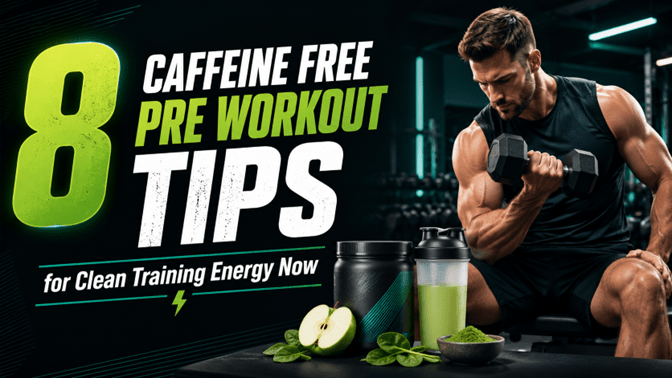
Not every good gym session needs a stimulant. Some people train late at night, feel anxious with caffeine, manage sleep issues, or simply prefer a calmer kind of focus. For them, a caffeine free pre workout can be an attractive option. It can support the ritual of getting ready to train without the fast heartbeat or wired feeling that some stimulant formulas create.
This guide explains how to choose and use a non-stimulant option in a practical way. You will learn what these products usually try to support, how timing works, what ingredients are commonly included, and how to build energy through food, hydration, and warm-up habits. The goal is steady performance, not a dramatic rush that disappears after the workout.
What Does Non-Stim Mean?
Non-stim usually means the product does not contain caffeine or other strong stimulants. It may still include ingredients aimed at muscle pump, hydration, endurance, focus, or strength support. Because formulas vary widely, the label matters. Do not assume every non-stim product is gentle just because it has no caffeine.
A non-stim product may be useful for evening workouts, caffeine-sensitive users, people who already drink coffee, or lifters who want to reduce stimulant dependence. It can also be helpful during a caffeine break. However, it should still be used with the same common sense as any supplement: read the label, start conservatively, and avoid products with unclear ingredient amounts.
Get 20% off in Bulk Extreme which is help to boost your confidence.
Why Train Without Caffeine?
Caffeine can be helpful, but it is not the only path to energy. Some people feel better when their workout starts calmly. They can focus on breathing, technique, and pacing instead of feeling overstimulated. This is especially useful for hypertrophy sessions where controlled reps matter more than explosive intensity.
Training without caffeine also protects sleep for people who exercise after work. Sleep is a major part of recovery, mood, appetite control, and training progress. If a stimulant helps one workout but ruins sleep that night, the trade-off may not be worth it. A non-stim approach can support consistency across the whole week.
Common Ingredient Categories
Many non-stim formulas focus on pump ingredients. These are intended to support blood flow and the feeling of fuller muscles during training. You may see ingredients such as citrulline, beetroot, or other nitric-oxide-support ingredients. Results vary, and the dose matters, so label transparency is useful.
Some formulas include creatine, betaine, electrolytes, amino acids, or focus-support ingredients that do not act like caffeine. Creatine is often more useful when taken daily rather than only before training. Electrolytes may help if you sweat heavily. The important point is to understand the purpose of each ingredient instead of buying only because the label looks exciting.
Timing and Use
Most people take a non-stim powder twenty to forty-five minutes before training, but the best timing depends on the formula and your stomach. Mix it with enough water and give yourself time to warm up. Because there is no caffeine kick, the effect may feel subtle. That does not mean it is useless; it simply works differently from a stimulant drink.
Do not double the serving just because you do not feel a buzz. Non-stim products can still contain high amounts of active ingredients. More powder can mean stomach discomfort, tingling, or other unpleasant effects. Start with the label serving or less, then judge performance over several workouts rather than one emotional day.
Build Natural Energy First
A strong pre-workout routine starts long before the shaker bottle. Eat a balanced meal two to four hours before training if possible. Include carbohydrates for fuel and protein for muscle support. If you train early or between meals, a small snack can help. Simple options include a banana, toast, yogurt, oats, or rice cakes.
Hydration should begin earlier in the day. Walking into the gym thirsty can make the session feel harder than it should. Add water gradually, and consider electrolytes if your training is long, hot, or sweaty. A non-stim product works best when the basics are already in place.
Best Workouts for Non-Stim Support
Non-stim formulas often fit bodybuilding-style training, evening lifting, pump-focused upper-body days, moderate leg sessions, and longer workouts where steady energy feels better than a sharp spike. They can also work for people who train after a stressful day and do not want more stimulation.
For maximal power or very early morning sessions, some athletes may still prefer caffeine. That is a personal choice. The important thing is to match the product to the workout. A calm pump session, technique practice, or controlled strength day does not always need aggressive stimulation.
Read more about The Benefits of swimming exercise.
Mistakes to Avoid
The first mistake is assuming non-stim means side-effect-free. Any supplement can cause issues for certain users. The second mistake is ignoring the label. The third mistake is expecting a caffeine-like feeling. Non-stim energy is often quieter. Judge it by performance, pump, focus, and recovery rather than by how wired you feel.
Another mistake is using a supplement instead of fixing sleep and nutrition. If you are tired because you sleep four hours and skip meals, even the best product will not solve the real problem. Supplements can help polish a good routine, but they should not be the foundation of the routine.
Simple Evening Workout Routine
For a calm evening lift, eat a light meal two to three hours before training. Thirty minutes before the session, mix your non-stim product with water. Start with mobility, easy sets, and breathing. Train with controlled reps and avoid rushing. After the workout, eat a recovery meal and keep the lights lower as bedtime approaches.
This type of routine creates a clear transition from work stress to training focus. It also protects sleep better than a late stimulant. Over time, this consistency can matter more than one explosive workout. A routine that helps you train and still sleep is a routine you can keep.
Final Takeaway
A non-stim routine is not weaker. It is simply different. When you want calm focus, steady training, and better sleep protection, caffeine-free support can make sense. Read labels, use sensible servings, and build your energy from food, water, warm-up, and a plan you can repeat.
Extra Practical Notes for Readers
A caffeine break can be useful for people who feel they need more and more stimulant to get the same effect. During that break, a non-stim routine can keep the pre-workout ritual alive. You still mix a drink, prepare your mind, and start moving, but you remove the stimulant load for a while.
Focus can also come from routine. Put your phone away, write the workout before you start, choose a playlist, and begin with the same warm-up sequence. These small cues tell the brain it is time to train. A supplement can support the ritual, but the ritual itself is powerful.
If you care about pump, hydration matters. Muscles often feel flatter when you are under-fueled or dehydrated. Carbohydrates, fluids, and sodium intake can influence how you feel during higher-rep training. Look beyond the tub and think about the whole day.
For readers who are reducing caffeine, the first week may feel flat. That does not mean training is failing. The body may be adjusting to fewer stimulants. During this period, shorter workouts, extra warm-up time, and realistic expectations can help maintain consistency.
A non-stim routine can also be useful during deload weeks. When the goal is to keep movement quality high while lowering fatigue, a calmer pre-training drink may fit better than a highly stimulating formula. The product should match the purpose of the week.
Readers may also appreciate a comparison between pump, focus, and energy. Pump refers to the feeling of fuller muscles. Focus refers to mental attention. Energy may come from food, sleep, hydration, and stimulants. A caffeine-free product may help one area more than another depending on the formula.
Add a note about label transparency. A good label tells the reader what is inside and how much. If the amounts are hidden in a blend, it becomes harder to judge whether the product matches the reader’s needs. Transparent labeling is a useful buying signal.
A helpful pre-workout meal example is rice or oats with protein a few hours before lifting. For a shorter gap, fruit or toast can be easier to digest. The article should make it clear that food and supplement timing work together rather than competing.
Readers who train late may benefit from a bedtime-friendly routine after the session. A cool-down walk, light stretching, shower, balanced meal, and lower screen brightness can help the body shift from workout mode to rest mode.
Non-stim products can still be expensive. Encourage readers to decide whether they truly notice benefits across several workouts. If the result is not clear, the money may be better spent on quality food, coaching, shoes, or basic equipment. The human angle is important: some people simply dislike feeling wired. That preference is valid. Fitness does not require a loud, aggressive energy style. Calm, focused, steady training can build impressive results when repeated long enough.
Readers may wonder whether caffeine-free means less effective. The honest answer is that it depends on the goal. If the goal is alertness after poor sleep, caffeine may feel stronger. If the goal is pump, hydration, or evening training without sleep disruption, a non-stim formula may be a better fit.
Taste and mixability still matter because a product that is unpleasant will not become part of a routine. Encourage readers to try a small size first if possible. This is especially useful because non-stim products may taste different from traditional sweet caffeinated formulas.
Some readers may prefer single-ingredient options. For example, they may already take creatine separately or only want electrolytes. A full pre-workout blend is not always necessary. Simpler choices can be easier to track and easier on the budget.
A caffeine-free approach also pairs well with mindful training. Slower warm-ups, controlled breathing, written workout goals, and planned rest times can create a focused gym session. The absence of a stimulant does not mean the absence of intensity.
Include a short note for sensitive users. Even without caffeine, some ingredients may cause tingling, stomach discomfort, or headaches in certain people. Starting with a smaller serving and observing the response is still a wise habit. End with a consistency message. A calm workout repeated four times per week can outperform one overstimulated session followed by poor sleep and skipped training. Fitness rewards the routine that a person can actually live with.
Personal context matters with any performance drink or powder. Body size, caffeine tolerance, training time, sleep quality, medications, and health history all affect the response. A product that feels normal to one person can feel overwhelming to another. This is why cautious testing and label reading should be repeated throughout the article.
The article should avoid treating a supplement as the main solution. A strong workout still depends on programming, food, hydration, sleep, and realistic goals. A drink may help alertness or routine, but it cannot turn a poor plan into a smart plan. Readers need that honest framing.
Serving size deserves clear attention. Some products are one full serving per scoop or can, while others may list multiple servings in one container. Readers should check the supplement facts or nutrition label before using anything. Guessing is not a safe strategy, especially with stimulant products.
Read more about The Benefits of Cycling Exercise for Heart Health.
Frequently Asked Questions
Will a non-stim product give me energy?
It may support training, but not in the same obvious way as caffeine. You may notice better pump, hydration, or focus rather than a strong buzz.
Can I take it at night?
Many people choose non-stim options for night training, but always check the label to confirm there are no hidden stimulants.
Is it better than regular pre-workout?
It depends on your goal and tolerance. Stimulant formulas may feel stronger, while non-stim formulas may fit sleep, anxiety, or caffeine management better.
Can beginners use it?
Beginners can consider it, but they should first build good training, food, hydration, and sleep habits. Supplements are optional.
Do I need it for muscle growth?
No. Muscle growth comes from training, nutrition, and recovery. A supplement can support a session but cannot replace the basics.

