
"Medical Disclaimer: This article is for informational and educational purposes only and does not constitute medical advice, diagnosis, or treatment. Always consult a qualified healthcare professional regarding any medical condition, symptoms, or treatment decisions. Never disregard professional medical advice or delay seeking it because of information you have read in this article."
“Affiliate Disclosure: Some of the links in this article may contain affiliate links. If you click on a link and make a purchase, we may earn a small commission at no extra cost to you. These commissions help support our website and allow us to continue creating helpful health and fitness content.”
Introduction
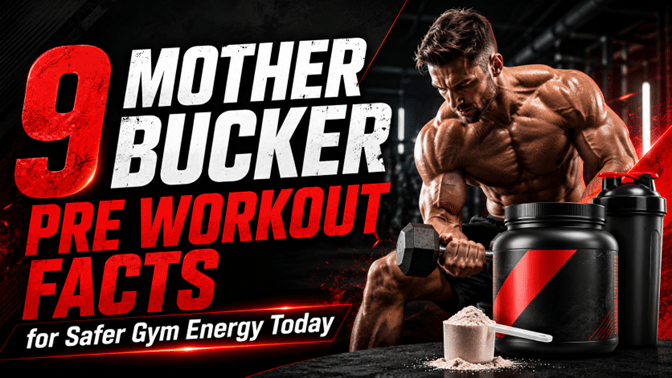
High-stimulant supplements get attention because they promise intensity, focus, and a strong push before training. But strong energy is not always the same as smart energy. Before using a product like mother bucker pre workout, it is important to understand what it is designed for, how stimulants may affect the body, and why a careful approach matters more than chasing the biggest kick.
This article is written as a practical, balanced guide. It does not tell every reader to use a supplement, and it does not treat pre-workout as magic. Instead, it explains how to think about serving size, caffeine, timing, tolerance, sleep, hydration, and training purpose. The best pre-training choice is the one that supports performance without making your health, sleep, or long-term consistency worse.
Who Should Be Careful?
Anyone sensitive to caffeine, new to training supplements, under eighteen, pregnant, dealing with heart concerns, managing anxiety, using certain medications, or struggling with sleep should be especially cautious. High-stimulant formulas can feel powerful, but they can also create jitters, rapid heartbeat, nausea, or poor sleep when the dose is too high for the person using it.
Even healthy adults should avoid stacking multiple caffeine sources without counting the total amount. Coffee, energy drinks, fat burners, tea, and some pre-workout powders can add up quickly. The safer habit is to read the label, start below the full serving when appropriate, and avoid taking strong stimulants late in the day.
Understand the Product Category
Pre-workout powders are usually designed to support energy, focus, pump, endurance, or a mix of these goals. Some products are mild. Others are built for experienced users who already know how their body responds to caffeine and other active ingredients. A high-stimulant product should never be treated like flavored juice.
When a formula is marketed for advanced athletes or seasoned gym users, that message matters. Beginners often do not need a heavy stimulant to train hard. They usually need a good program, better sleep, hydration, and a simple pre-training meal. Supplements may help some people, but they cannot replace those basics.
You must know about Grape Fruit: Hidden Health Perks & Critical Warnings.
Caffeine Awareness Comes First
Caffeine can improve alertness and may help performance for some people, but more is not always better. Too much caffeine can make a workout feel worse by increasing nervousness, stomach discomfort, shaking, or a racing heartbeat. It can also reduce sleep quality, and poor sleep can damage training results more than any supplement can help.
A simple rule is to calculate your total daily caffeine before adding a pre-workout. If you already drink two coffees and an energy drink, a strong powder may push you too high. If you train in the evening, even a moderate serving may still affect sleep. The best time for a stimulant product is usually earlier in the day, far enough away from bedtime.
How to Test Tolerance
Tolerance testing means using less than a full serving first. This is especially important with strong formulas. Start small, mix it with the recommended amount of water, and avoid dry scooping. Dry scooping is risky because it can cause choking and delivers a concentrated dose too quickly. A supplement should be used according to label directions, not social media trends.
Pay attention to your body during and after the session. Useful energy should feel controlled, focused, and productive. Warning signs include chest discomfort, dizziness, unusual shortness of breath, severe anxiety, or a heartbeat that feels irregular. Stop use and seek professional guidance if concerning symptoms occur.
Training Purpose Matters
A strong pre-workout makes more sense before a demanding session than before an easy walk or light mobility day. Use it only when there is a real training reason. If every session requires a stimulant to begin, the bigger issue may be poor recovery, low motivation, weak programming, or not eating enough during the day.
Reserve high-stimulant use for heavy leg days, intense conditioning, demanding strength sessions, or occasional performance-focused workouts. On easier days, try food, water, warm-up music, sunlight, or a short dynamic warm-up. This prevents mental dependence and helps keep the supplement effective when you truly want it.
Food-Based Energy Alternatives
Many people feel flat in the gym because they train under-fueled. A banana, oats, rice cakes, yogurt, toast, or a simple meal with carbohydrates and protein can make a big difference. Food-based energy is not as dramatic as a stimulant rush, but it often feels steadier and kinder to the stomach.
Hydration also matters. Training while mildly dehydrated can make effort feel harder. Add water earlier in the day, not only five minutes before lifting. If you sweat heavily, train in heat, or do long sessions, electrolytes may help. Keep the solution simple before assuming you need a stronger supplement.
Get 20% for Nutrigo Lab Strength.
Mistakes to Avoid
Do not combine several stimulant products just because each label looks safe by itself. Do not take a strong formula late at night, then wonder why sleep is poor. Do not ignore side effects because friends say the product is normal. Your tolerance is personal. What feels fine for one lifter may be too much for another.
Another mistake is using pre-workout to cover bad programming. If the workout is too long, too random, or too intense every day, energy drinks will not fix the problem. Good training has hard days, easier days, and recovery. Supplements should fit the plan, not rescue the plan.
Smart Buying Checklist
Look for clear labeling, serving size, caffeine amount, ingredient transparency, and third-party testing where available. Be cautious with proprietary blends that hide ingredient amounts. Read reviews, but remember that reviews often focus on flavor and feeling rather than long-term suitability.
Choose a product based on your goal, not only hype. If you want pump without stimulants, a non-stim option may fit better. If you want mild focus, coffee may be enough. If you want maximum energy, be honest about risk, tolerance, and sleep. The best choice is the one you can use responsibly.
Learn Which one is better: Walking vs GYM.
Final Takeaway
Pre-workout should support training, not control it. Read the label, respect caffeine, protect sleep, and use the product only when it fits the workout. Smart energy is not about proving how much you can tolerate. It is about training well today and still feeling good enough to train again tomorrow.
Extra Practical Notes for Readers
Flavor and hype can make a strong product feel casual, but the body responds to active ingredients, not marketing. Treat every serving with respect. Keep the scoop dry, measure carefully, and avoid guessing. Taking extra because the first few minutes feel normal is a common way users accidentally overdo stimulants.
It is also wise to separate supplement testing from important training days. Do not try a new strong formula before a competition, personal record attempt, or long drive home from the gym. Test it on a normal day when you can observe your response calmly.
If your goal is fat loss, remember that a pre-workout is not a fat-loss plan. It may help you train with more energy, but food choices, total calories, protein, daily steps, sleep, and consistency matter far more. Do not let the supplement become a distraction from the basics.
For a health website, this topic should be written with extra responsibility because readers may treat product articles as buying advice. A balanced article should explain what the product category is, who should be cautious, and why label reading matters. This builds more trust than simply repeating promotional claims.
A useful section for readers is a decision checklist. Ask whether they train early enough, tolerate caffeine well, sleep normally, avoid other stimulants, and understand the serving size. If the answer is no to several questions, a milder option may be more appropriate.
It is also wise to mention tolerance. When someone uses strong stimulants often, the same serving may feel less noticeable over time. That can tempt the user to increase the dose. A smarter choice may be a break, a lower-stim day, or a return to food-based energy for several sessions.
Readers should understand that focus and intensity are not the only measures of a good workout. A technically clean session, a well-paced run, or a controlled hypertrophy day may be more productive than a session that feels wild but is poorly executed.
The article can include a simple timing example. If someone trains at noon, a carefully measured serving may leave plenty of time before sleep. If someone trains at 8 p.m., the same serving may be a poor choice. Context decides whether an ingredient is helpful or disruptive.
Mention that taste should not override caution. Candy-like flavors can make strong products feel harmless, but the body responds to active compounds. This is especially important for younger readers who may be influenced by social media gym culture. A practical alternative is to create two pre-workout routines: one stimulant routine for demanding days and one non-stim routine for normal days. This gives readers flexibility and reduces the chance of relying on one intense product for every session.
For publishing, avoid making medical guarantees, fat-loss promises, or claims that the product is safe for everyone. Use careful language, encourage professional guidance when needed, and keep the tone educational. That is better for readers and better for long-term site trust.
A safer article should also discuss hydration because stimulant users sometimes overlook water. A strong pre-workout may make a person feel ready, but training still raises sweat loss and fluid needs. Encourage readers to bring water to the gym and not rely only on a flavored pre-training drink.
Another practical point is storage. Keep supplements away from children, pets, heat, and moisture. Powders can clump when exposed to humidity, and strong stimulant products should never be left where someone may use them casually without understanding the serving.
The article should make a clear difference between motivation and physical readiness. Feeling excited after taking a supplement does not mean the joints are warmed up or the nervous system is ready for heavy work. Warm-up sets remain important even when energy is high.
A good reader-friendly tip is to avoid late-day experiments. If someone wants to test tolerance, choose a day when training is earlier and the evening is not packed with responsibilities. That way, if the product feels too strong, the person can rest, hydrate, and observe their response.
For people who want a pump more than stimulation, explain that stimulant strength and pump quality are separate things. A product can feel intense because of caffeine while another product may support pump without the same buzz. Matching the formula to the goal matters.
Close with a responsible reminder: no supplement should pressure a person to train through warning signs. If something feels wrong, the workout can stop. Long-term fitness requires respecting the body, not proving toughness to a label or a gym culture trend.
Personal context matters with any performance drink or powder. Body size, caffeine tolerance, training time, sleep quality, medications, and health history all affect the response. A product that feels normal to one person can feel overwhelming to another. This is why cautious testing and label reading should be repeated throughout the article.
The article should avoid treating a supplement as the main solution. A strong workout still depends on programming, food, hydration, sleep, and realistic goals. A drink may help alertness or routine, but it cannot turn a poor plan into a smart plan. Readers need that honest framing.
Frequently Asked Questions
Is a high-stimulant pre-workout necessary for muscle gain?
No. Muscle gain depends more on progressive training, enough protein, adequate calories, and recovery. A supplement may improve workout energy for some users, but it is not required.
Can I take it every day?
Daily use may increase tolerance and can disturb sleep or raise side-effect risk for some people. Many users reserve strong products for harder sessions rather than every workout.
Should I take it on an empty stomach?
Some people tolerate it, while others feel nausea or jitters. A small snack and enough water may make the experience smoother.
Can I mix it with coffee?
That depends on total caffeine intake and personal tolerance. Stacking caffeine sources can increase side effects, so it is usually wiser to avoid combining them.
What should I do if I feel unwell?
Stop using the product, rest, hydrate, and seek medical advice if symptoms feel serious, unusual, or persistent.

